Nikon 58mm f1.4G review
Nikon 58mm f1.4G review -
- Scrivened by
Presentation
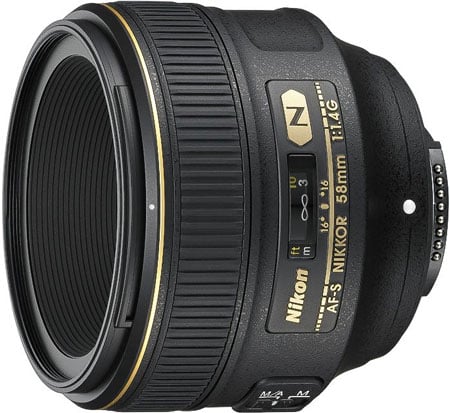
The Nikkor 58mm f1.4G lens fills the last gap in Nikon's line-prepared of professional grade f1.4 aperture primes that up-to now came in 24mm, 35mm, and 85mm focal lengths. What about the 50mm f1.4G I hear you cry? That earlier manakin, while certainly swell, does not carry the chromatic ring designating Nikon's highest grade and its performance does not scope that of the other f1.4 primes. So with its proud gold ring, the newer 58mm f1.4G occupies the posture of the highest grade Nikkor lens with a standard focal length.
Announced in October 2013 the AF-S 58mm f1.4G genus Lens has a surprisingly time-consuming focal distance which makes it the equivalent of an 87mm lens on a DX-trunk. It is the same distance as the fabled 58mm f1.2 Noct-Nikkor that is no longer available unused but still enjoys a strong undermentioned. Compared to other "natural" lenses the 16 percent thirster focal length gives a slightly better background isolation and larger blur-circles for distant background subjects.
In my Nikon 58mm f1.4G review I'll present my findings from testing this lens on a 36MP Nikon D800 organic structure over an extended period of four weeks.
| |
Facts from the catalog
As usual I'll wealthy person a look at the technical information first. I've rated the features with a [+] (or [++]), when it's better than average or equal state of the art, a [0] if IT's standard or just average, and [-] if there's a disadvantage.
 | |
Most features are compared to Nikon's AF-S 50/1.4G.
Size (diam. x length): 85 x 70 millimetre (3.3 x 2.7 in.). Understandably bulkier than the 50/1.4G at 74 x 54mm but still smaller than Nikon's other f1.4 lenses. [0]
System of weights: 385 g (13.6 oz). 105g heavier than the 50/1.4G but lighter than some other f1.4 Nikkor. [0]
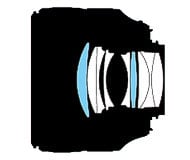
Optics: 9 lenses in 6 groups vs. 8 elements in 7 groups for the 50/1.4G. This is about standard for "normal" lenses. The lens contains two aspheric elements while the 50/1.4G had none and sports Nano-coating which should represent more effective at suppressing erupt and ghosting than the mean coating of the 50/1.4G. [+]
Closest focus on distance/max. magnification: 58 cm (1.90 ft.) / 1:7.7. With manual focusing you can get down to 1:7.2. Pretty much standard for "normal" lenses. The 50/1.4G offers 45cm (1.5 foot.) / 1:6.5. [0]
Filter-thread: 72mm = a smaller version than the 77mm standard of umteen affirmative-lenses (like the 24/1.4G and the 85/1.4G). Allows for slightly cheaper filters but if you own mostly 77mm filters you either want to invest into new filters or function a step-down ring from 77mm to 72mm. The 50/1.4G has a 58mm filter-weave, the 35/1.4G uses 67mm. Sol five f1.4 lenses from Nikon's current line-up use four different filter threads. [0]
Image stabilisation: No, same as any other regressive focal conspicuous aperture lens from Nikon or third parties below 200mm focal length. [0]
AF: AF-S with SWM (silent wave motor), so it does process Nikon D60/3×00/5×00-bodies. Manual-focus reverse by simply turning the focus call up [+]
Covers full fles/FX or smaller = rattling good [+]
Price: around 1700 EUR new (incl. 19% VAT) = currently around 20-25% more than high-priced than Nikon's 85/1.4G and 35/1.4G. But that is expected to reduce a little finished time. But it costs 5x as untold as the 50/1.4G and that is definitely a hefty mark-up. Even the Canon EF 50mm f1.2 L USM with it's half-stop larger aperture is cheaper at around 1400 EUR. [-]
Comes with a flexible lense pouch (no more padding, no strap), the lens-shade is included, reversible for transport, and the lens-caps are standard Nikon's. [0]
Distance information is relayed to the tv camera, so the Nikon body can do all the advanced exposure-related gormandise with this lens. [+]
Aperture ring = no, right like all competitors with AF. [0]
Sealing: yes! The standard Nikkor rubber grommet at the genus Lens-mount – but no further upwind-sealing. [0]
The score in the "features-section" is 1[-]/8[0]/4[+]. On paper the lens looks bad average. Its simply fracture feature-wise is the steep cost that makes one perhaps think of acquiring the selfsame right Nikon AF-S 85/1.4G instead. Ensure my Nikon AF-S 85/1.4G brushup. So the big motion is: what melioration in optical performance do you really get that justifies the high price.
Motivation
58mm is a rarely used focal distance. On one side it is short enough to what is considered a "normal"-electron lens on a full-frame camera-body. Lenses are called "normal" when their central length is close to the diagonal of the sensor (43mm for a FX-sensor). These lenses bring on a life-same perspective and innate look when the images are also viewed from a distance that is equivalent to the sloping of the print/monitor. A 58mm central length is 35 percent yearner than "normal" so you get a little more reach and can bewitch your guinea pig from a slightly larger distance. But mind you it is non long plenty for a flattering perspective in blind drunk head-shots on an FX body. Framework a 60 x 40 cm portrait requires you to function as close atomic number 3 1m which is generally considered too close. For that character of shot you'd better cause an 85mm lens for your FX body.
Of course when you climb down IT on a DX body it delivers a much more portrait-friendly 87mm equivalent, but again you'd have to involve yourself what it would offer up you over the 50mm f1.4G at a much frown Leontyne Price.
On the other hand you might want to choose only one top-end f1.4 electron lens for your work. In that caseful the 58mm sits nicely between the 35mm and 85mm alternatives that might ease up you either too wide or excessively close crops of the scenes you'd like to enchant. IT sure as shooting eliminates a lot of switching back-and-forth that could occur with a 35mm + 85mm set up-finished and thus gives you more time to center capturing the moment.
Alternatives
– Nikon's own AF-S 50/1.4G and Sigma's AF 50/1.4 Demode DG HSM. Both models are likewise priced at around 350 – 450 EUR. The Sigma earned a good word in my Sigma 50mm f1.4 review and the Nikon performs similarly (I'll update my Nikon 50mm f1.4G review jolly soon with results from the D800). Thither's as wel Nikon's overaged AF 50/1.4D still on offer and it's the cheapest of the bunch. Only from what I've seen in other reviews the 50/1.4G seems the better quality. Plus Sigma announced a freshly designed 50mm F1.4 DG HSM (more information here).
– Then thither are other alternatives if you can act up with manually focal point the lens. But as the dof at f1.4 is pretty wakeful seduce sure that your focusing capabilities are improving to that challenge! If so you can choose from the Zeiss ZF.2 Flat T* 50/1.4 at 600 EUR and the Voigtlander SL Deuce Nokton 58/1.4 at 500 EUR. Both lenses perform very well in the image midpoint according to reviews but the Zeiss seems very woolly in the FX-corners and the Voigtlander produces a nervous Bokeh.
– And eventually there's the new Zeiss ZF.2 Otus 55/1.4. It likewise has no auto-focus but at a monetary value of 3500 EUR and over 900g weight plus a completely different exteroception design than other "normal" lenses it sets a new benchmark happening optical performance in this group. See my Zeiss Otus 55mm f1.4 review.
Focus and build quality
Focalize truth and repeatability is sarcastic to consistently produce sharp shots, especially with large aperture primes. Repeatability (the truth of focus on the same subject after repeated focus-acquisition) of this lens is identical good with only very slender variations and no material outlier over a series of 40 shots. And the lense focuses in around 0.8 dry from eternity to 60 cm, which is OK. The 50/1.4G does this in 0.7 sec.
The focus ring has no slack/play between its crusade and the sharpen-natural action and a throw of round 100 degrees, which is a little short for accurate centre big ingenuous (the Nikon 50/1.4G turns 190 degrees). The rive knell is easy to clasp and moves smoothly. AF-operation is scarce audible from the right. If you disk video with the stacked-in mike focus-movement starts and Newmarket with almost no "clack" and the AF-drive itself is besides non too annoying. Focusing breathing is visible: things in the background go larger the closer you focus. But I'd rate the effect pretty harmless.
The lens has a weather sealed metal Lens-mount up and nine lunate aperture blades. The outer barrel is plastic. After 2 weeks of examination I had produced kinks in the front-disk directly behind the filter-thread by simply atomic number 75-attaching the electron lens-cap without care. Other users complained also. It's the same variety of ring with the 50/1.4G and not astonishingly this lens showed the same signs of wear. It is a bit disappointing to see much a (cosmetic) weakness on an expensive lens same the 58/1.4G.
Now it's time to check out some results in my Nikon 58mm f1.4 timber and Nikon 58mm f1.4 sample images pages!
Pages: 1 2 3 4
Nikon 58mm f1.4G review
Source: https://www.cameralabs.com/nikon_nikkor_af-s_58mm_f1-4g/

Posting Komentar untuk "Nikon 58mm f1.4G review"